
Same-material supports: how APD releases supports with ink
APD prints supports from the same polymer as the part, in full contact with it, and jets a release ink where the two meet. The supports come off by hand, with no second material and no dissolving step.
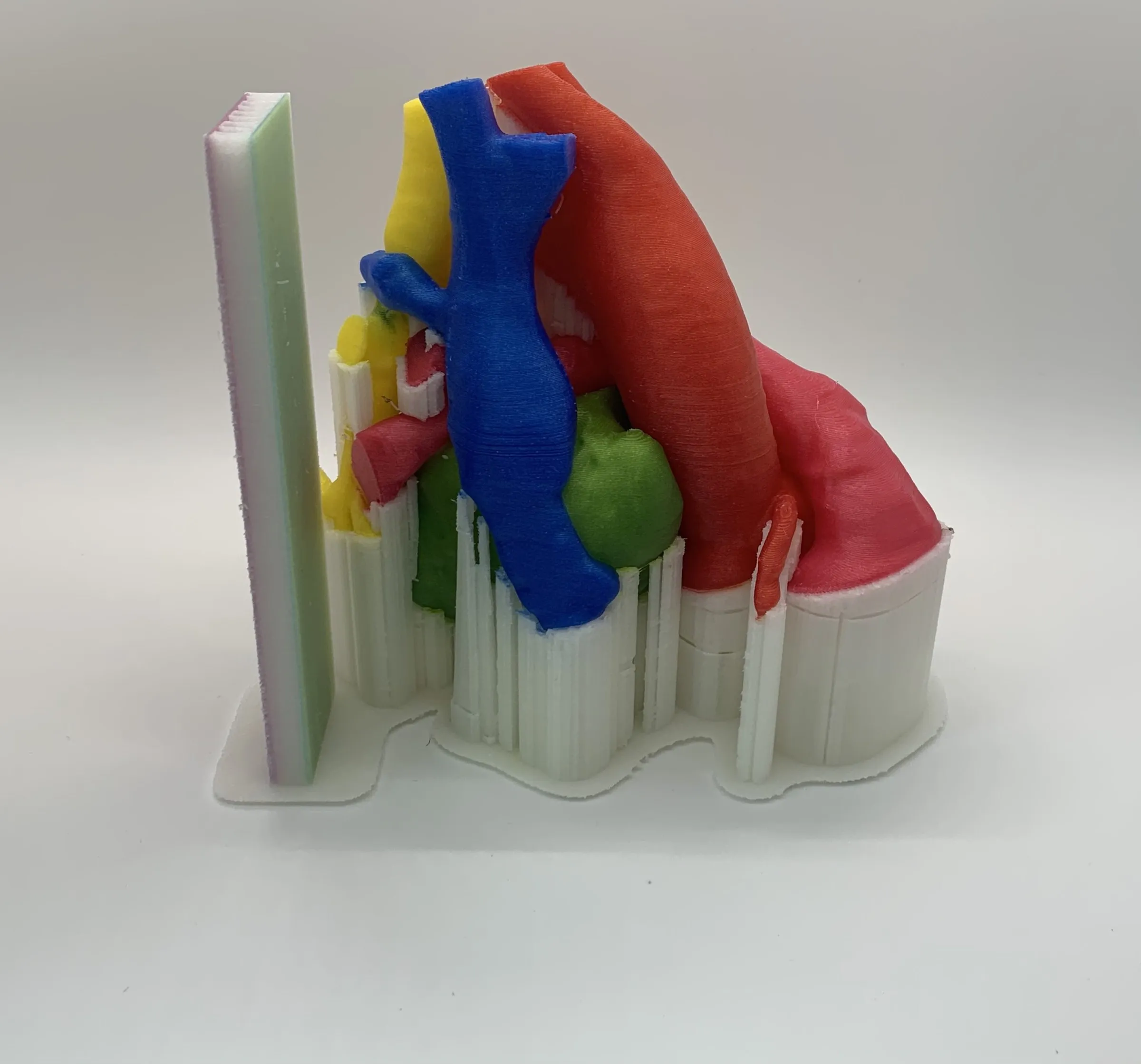
Every extrusion printer has to hold up overhangs and curved undersides while they print. The usual answers each come with a cost. APD takes a different route: the supports are printed in the same material as the part, right against it, and a jetted ink keeps the two from fusing.
The two usual options
Breakaway supports in the part’s own material. To make them removable, the slicer leaves a small air gap between the support and the part. The surface printed over that gap has nothing solid under it, so it sags slightly, and the marks left where the supports broke off usually need sanding or trimming.
Soluble supports in a second material. These print in contact with the part, which gives a better underside, but they need a second filament, a second nozzle or a printer that switches materials, and a dissolving bath after the print. The two materials also have to be compatible enough to print together.
What APD does instead
APD adds a piezo printhead to an extrusion printer. Every layer is extruded first, then the printhead jets functional inks onto it. One of those inks is a release ink.
- Extrude. The extruder lays down a flat layer for the part and, where needed, for the supports, all from the same filament.
- Jet release ink. Wherever a support layer meets the part, the printhead places release ink on the interface.
- Repeat. The next layer is extruded directly on top. Supports sit in full contact with the part, with no air gap.
- Release. When the print is done, the supports come off along the ink line.
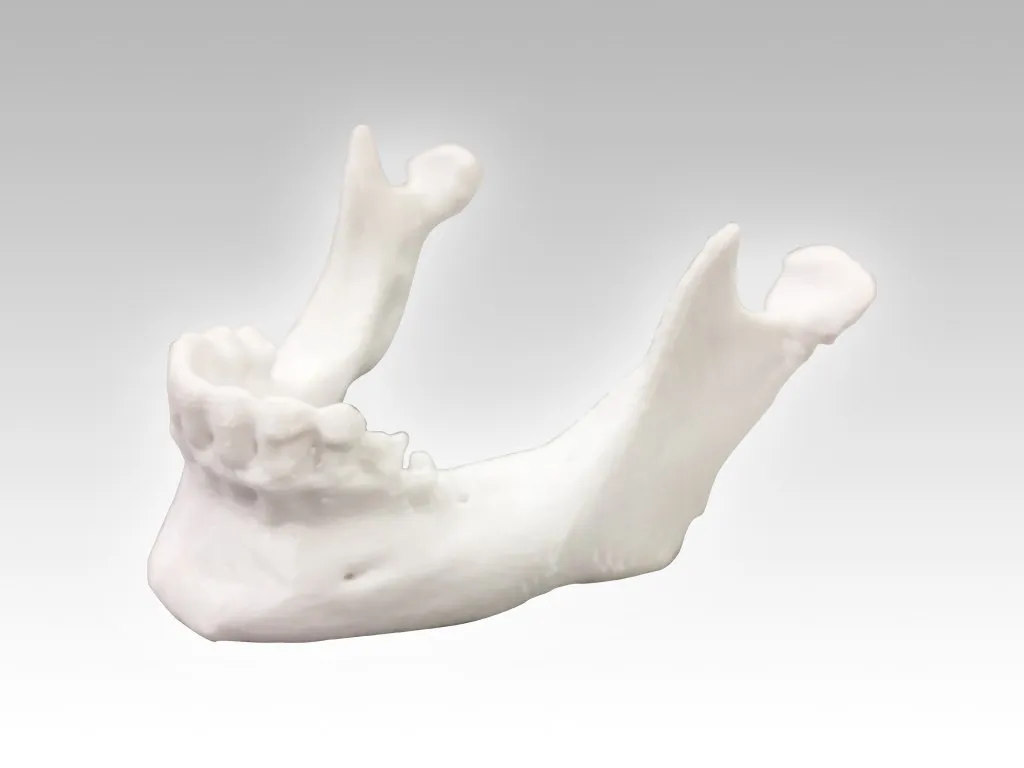
Because the support touches the part over its whole surface, curved undersides and overhangs are fully supported while they print. Because the ink stops the two from bonding, they still separate.
What it means in practice
| Breakaway | Soluble | APD release ink | |
|---|---|---|---|
| Support material | same as part | second material | same as part |
| Contact with part | air gap | full contact | full contact |
| Removal | break off, then finish | dissolve in a bath | by hand along the ink line |
| Extra hardware | none | second nozzle or material switch | printhead (part of APD) |
- One material. No second filament to buy, store or match to the part material.
- No bath. Parts are ready to use once the supports are off.
- Removed by hand. In deep or enclosed areas, simple tools may help reach the supports.
- Works with Rizium CF and GF. Release has been used with both Rizium grades, which are carbon and glass fiber filled cyclic olefin copolymer (COC) blends.
The Prymetech CMM fixture case study is one example: a 63 hour print in Rizium CF whose supports released with ink and needed virtually no post-processing.
Where release fits with the other capabilities
Release is one of five demonstrated APD capabilities, all delivered by the same jetting step: full color, embedded marking, release, stronger bonding between layers and surface modification. A single part can use several at once, for example a fixture with an embedded part number, printed on same-material supports. See how APD works for the diagram, or tell us about a part that is hard to support today.