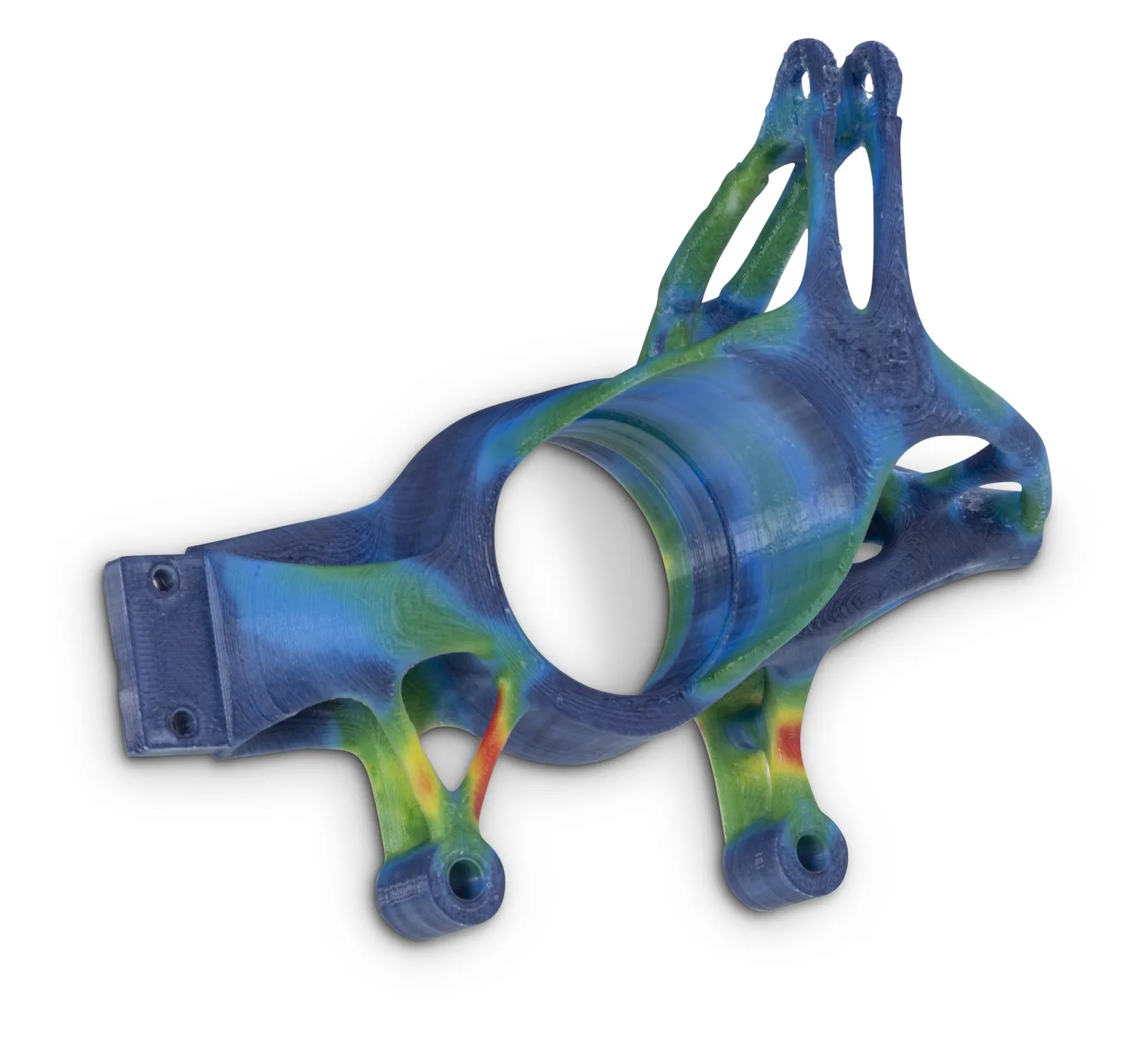
Full color
CMYK inks are placed voxel by voxel, so color follows the design: labels, gradients, or analysis results such as this stress map.
Color shows simulated stress from the design analysis.

Augmented Polymer Deposition (APD)
APD modifies polymer properties layer by layer, at the surface and inside the printed part. A piezo printhead jets functional inks onto each extruded layer to control color, marking, support release, layer bonding and surface finish in a single print.
Palitra turns new product ideas into parts that conventional 3D printing can't make. We develop applications with partners using APD, then license the process to take them to production.
Demonstrated today
Each comes from ink jetted onto the extruded layer. Further applications are open for co-development.
CMYK inks are placed voxel by voxel, so color follows the design: labels, gradients, or analysis results such as this stress map.
Color shows simulated stress from the design analysis.
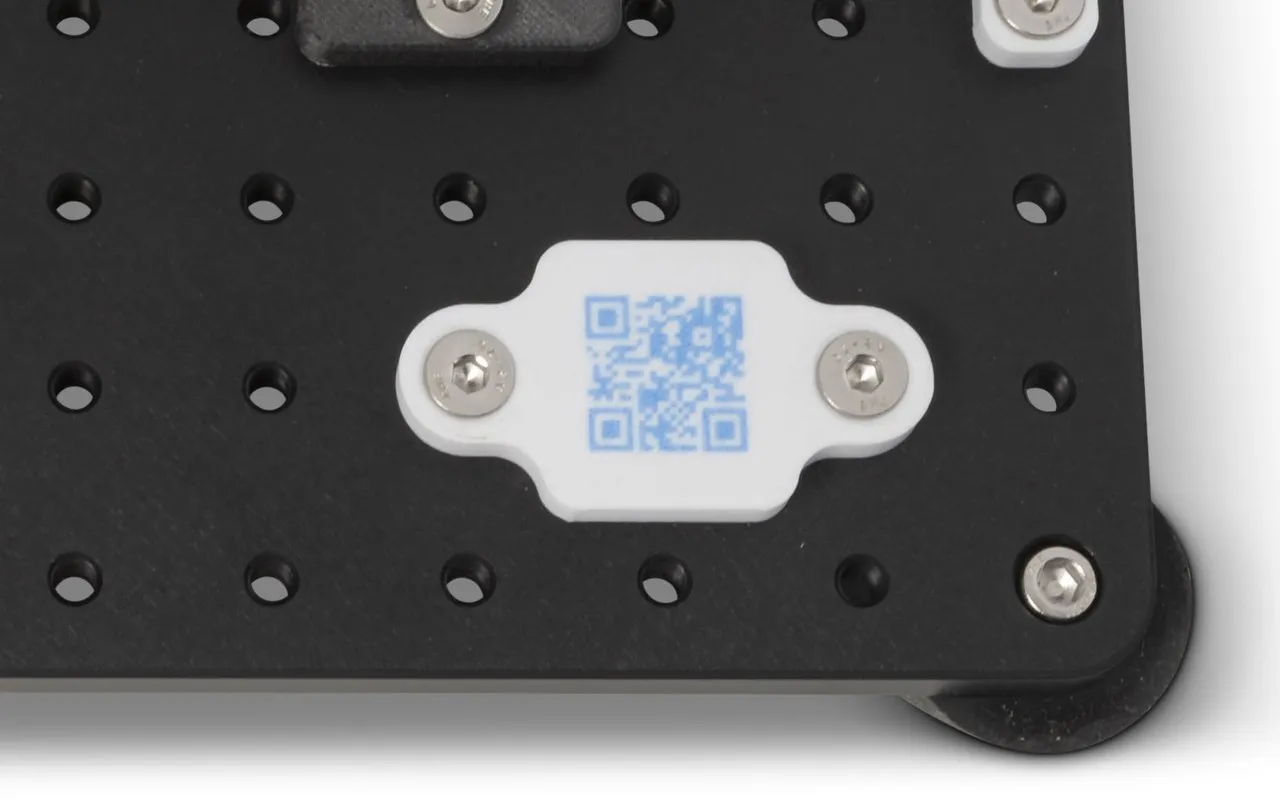
Text, part numbers and QR codes are embedded just below the surface during the build. A thin skin of UV-absorbing polymer protects them from wear and fading, so traceability and instructions last as long as the part.
A release ink is jetted between the part and its supports. Supports print in the same material as the part and separate cleanly.
Ink jetted at each layer interface improves bonding between extruded layers, the usual weak direction of an extruded part.
Ink applied at the outer edge of each layer reduces the stair-step texture that layered printing leaves on curved surfaces.
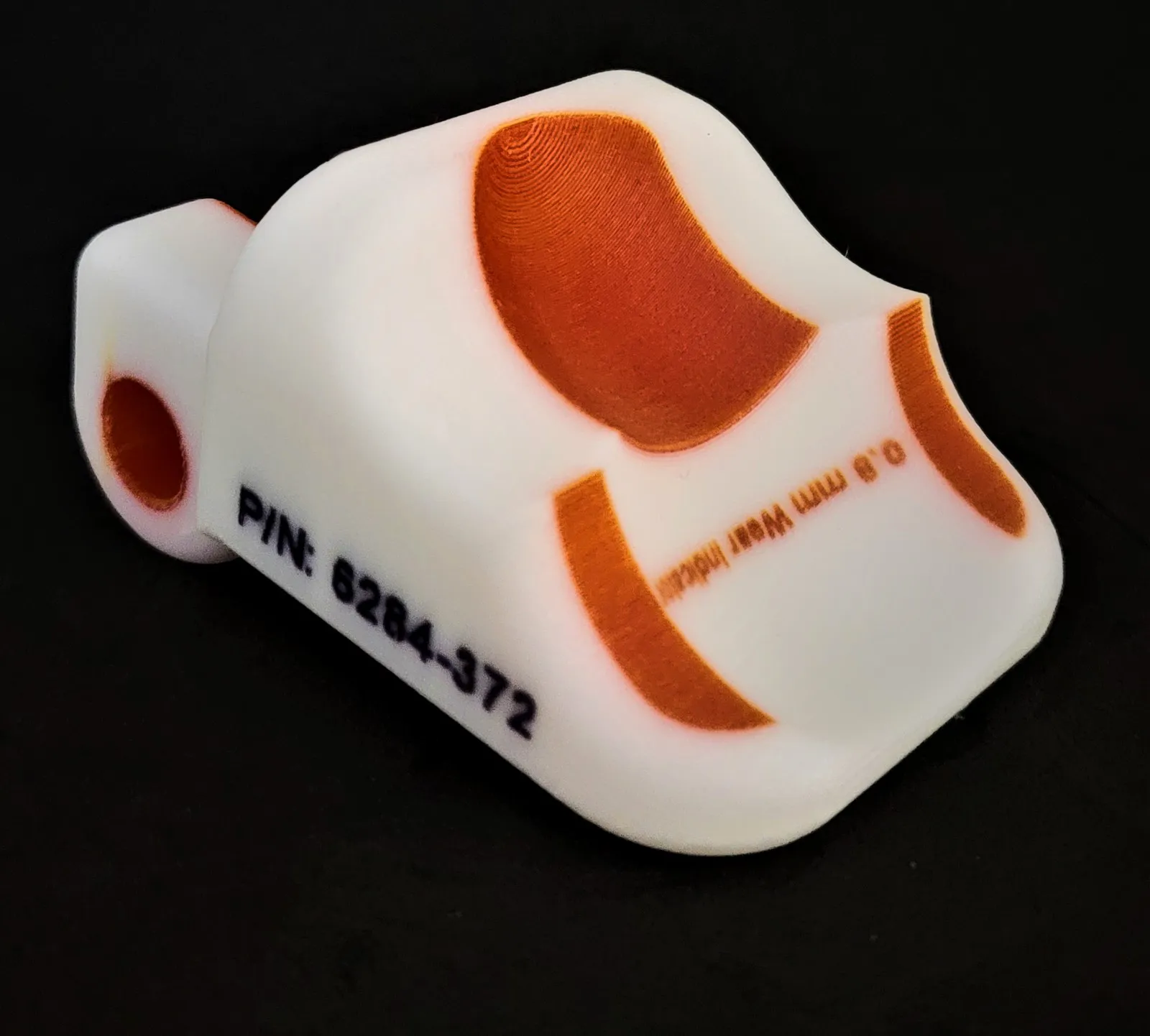
One part, one print
This fixture holds a component during production, and its contact faces wear a little with every cycle. APD builds an orange layer 0.8 mm below those faces, inside the same print. When orange shows through, the operator knows the fixture has reached its wear limit and needs replacing, without gauges or measurements.
The part number and the wear-limit note are embedded in the part during the same job, a few voxels below the surface. A thin skin of UV-absorbing polymer protects them from wear and fading, and the part identifies itself when it is time to reorder.
Need parts, not a license?
A fixture that wears out without warning, a part that has to carry its own part number or QR code, supports that take longer to remove than the part took to print. We print parts with APD on our own machines in Rizium materials, and tell you up front whether APD is the right fit.
Open for co-development
The same jetting step can place far more than color. These applications are open for joint development with partners who bring an application, a material or test capability.
Conductive ink placed inside the part for circuits, heaters, sensors and antennas, routed where the design needs them.
Propose a projectZones with tailored dielectric properties for RF components and electrical insulation, built into the part.
Propose a projectLocal surface treatment printed in place: wettability, adhesion or chemical resistance only where it is needed.
Propose a projectCompatibilizing inks at the interface, so polymers that normally do not bond can be joined in one build.
Propose a projectSoft and rigid zones in one part from one base material, for grippers, seals and damping.
Propose a projectActive agents placed voxel by voxel, for devices that carry or release them in defined zones.
Propose a projectAll areas build on Palitra's APD process patents. See all development areas
Co-development
We print your application with APD and test it against your requirements.
We adapt inks, materials and process settings to your product and production setup.
You license the APD patents and know-how for your field of use.
Roadmap
APD is a jetting step, not a single printer. The same step can be added to other processes: first high-performance polymers, then powder bed processes, where it becomes Augmented Material Deposition (AMD) for polymers, metals and ceramics.
Read the roadmapTell us what you want a part to do. We will tell you whether APD can do it.
Start a conversation